 Branding
 Digital Marketing
 Web & App Dev
 IT Services
Why Your Biggest Tech Problem Is Often a Process or People Problem in Disguise
A while ago, the leadership team of an engineering company expressed interest in switching their website from WordPress to "something else" because they thought content changes were being made too slowly by their team, and so something must be wrong with the platform.
After a quick call, it turned out the person responsible for content updates internally had left, and there was no active owner for the website anymore. That's why the content updates had stalled.
This sounds silly and extreme, but it actually happens more than you'd think. IT and technology projects fail all the time, and when they do, the technology or platform is often blamed, when the real root cause may lie in a process gap or a lack of ownership.
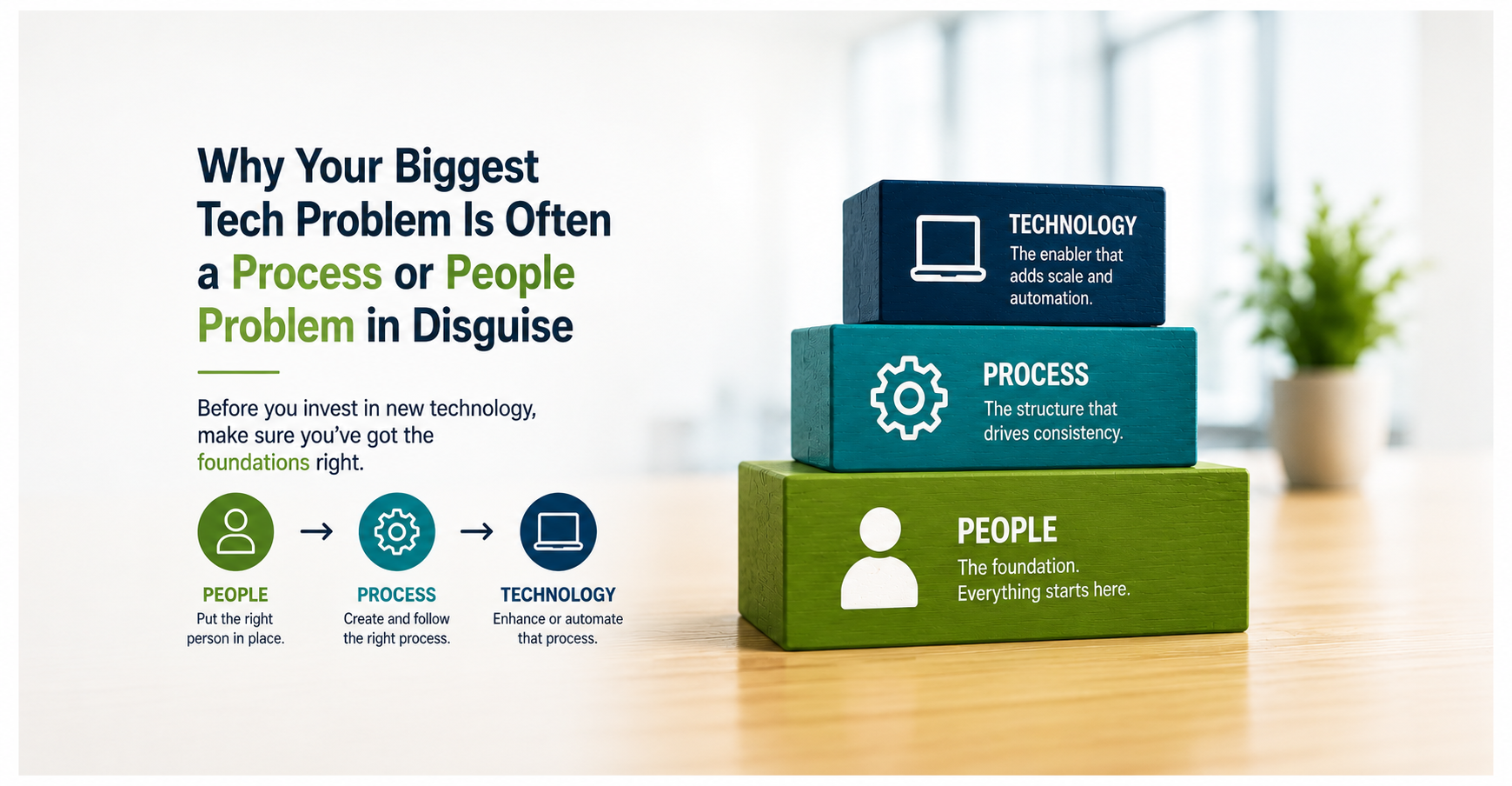
That's why at Smartt, we like saying: People -> Process -> Technology.
First, you put the right person in place.
Then, you make sure the right process is created and followed.
Finally, you enhance or automate that process with technology.
Do things in reverse, and you'll fall flat on your face.
This isn't a new idea…but it gets ignored constantly
It's actually a well-worn principle in operations and organizational design. But in the rush to adopt new tools, it gets skipped over more often than not. And it plays out in predictable ways.
Example #1: A company rolls out a new CRM, but nobody defines who owns data entry or how leads get categorized. Six months later, the pipeline reports are a mess and the sales team has quietly gone back to spreadsheets. The CRM gets blamed.
Example #2: A marketing team adopts an automation platform, but the email sequences were never properly mapped before the tool was configured. Contacts fall through the gaps, nurture flows contradict each other, and unsubscribe rates climb. The platform gets blamed.
Sound familiar?
The diagnostic question we always ask first
Before recommending any technology change, we ask: if this process were running perfectly, what would it look like, and who would own each step?
That one question surfaces the real problem more often than any audit tool. Because if you can't answer it, the technology won't answer it for you.
The engineering company didn't have a CMS problem. They had an ownership problem. A new platform wouldn't have fixed it, as they'd have had the same slow content updates on a shinier system, plus a migration headache on top.
Where it gets harder
The obvious cases are easy to spot in hindsight. The trickier ones are where a genuine technology limitation is masking a process gap underneath, or where a workaround has been in place so long that nobody realizes the underlying problem was never actually solved.
Here’s another example: we worked with a professional services firm that had built an elaborate manual reporting process in Excel (weekly exports, color-coded tabs, hours of reformatting) because their project management tool "couldn't produce the right reports." When we looked closer, the tool could produce exactly what they needed. The team just hadn't been trained on it, and by the time anyone noticed, the Excel workaround had become the de facto system. Nobody wanted to touch it.
In this case, onboarding, not technology, was the problem.
What good sequencing actually looks like
When people, process, and technology are aligned in the right order, implementations go smoother, adoption sticks, and the ROI actually shows up.
Here's what that looks like in practice:
People first. Identify who owns the outcome. (Note: Note how we didn’t say project, but outcome!) Someone needs to be accountable for the process working, long after the implementation is done. If that person doesn't exist or hasn't been named, stop and solve that first.
Process second. Document what the process should look like when it's working well. Not what it looks like today, but what good looks like. This doesn't have to be elaborate. Sometimes a simple flow or written SOP or video is enough. The goal is to make the logic explicit before you encode it in software.
Technology last. Now you're ready to evaluate tools. You know what the process needs to do, you know who's going to own it, and you can make an informed decision about what to buy, build, or configure, instead of reverse-engineering your process to fit a tool someone already purchased.
The uncomfortable truth about tech adoption
Most technology failures change management failures, not technology failures. The tool worked fine. It’s just that the rollout didn't account for how people actually work, who was going to champion it internally, or what would happen when the consultant left and the license renewals started coming in.
The companies that get the most out of their technology investments are the ones who did the boring work first: clarifying ownership, documenting the process, and only then choosing the technology that fits.
So before you blame the platform
The next time something isn't working, resist the impulse to reach for a new tool. Instead, ask the harder questions first:
- Does anyone own this outcome?
- Is there a documented process, or is it all tribal knowledge?
- If we had the perfect tool, would we actually know how to use it?
If the answer to any of those is no, that's where the work is. The technology can wait!
Sometimes You Just Need a Helping Hand
Most agencies and IT firms lead with technology. At Smartt, we like saying that we lead with the conversation and “tough questions”. When clients come to us through FlexHours for IT management or automation, the first thing we do isn't configuring systems, but to ask who owns what, and whether the process underneath is solid enough to be worth automating.
That diagnostic lens is baked into how we work, so that the right outcome actually gets delivered. If you're not sure whether your next tech investment will stick, reach out and let’s start the conversation!