 Branding
 Digital Marketing
 Web & App Dev
 IT Services
The IT Checklist for a Growing Franchise Business
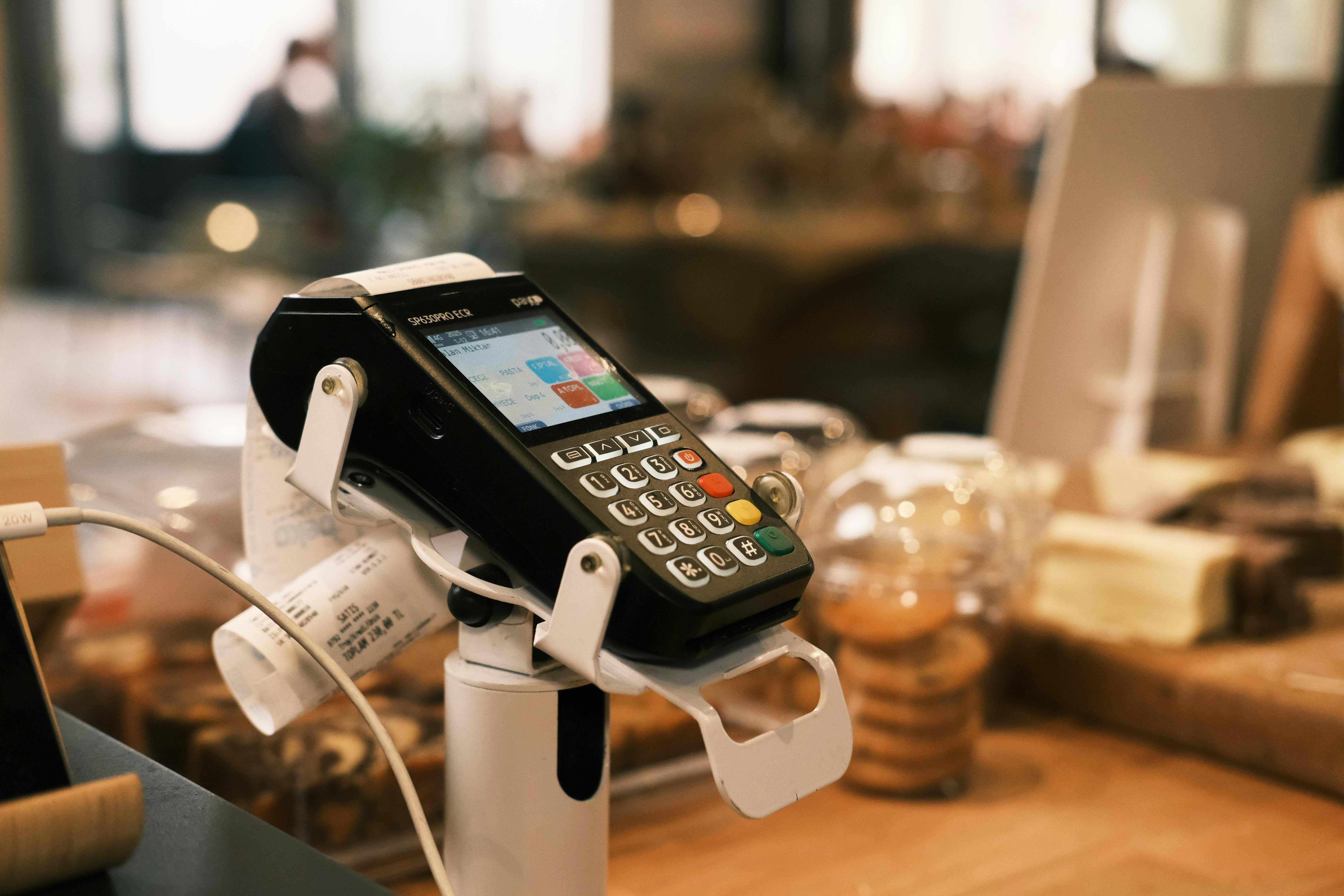
Growing a franchise in today’s digitally enabled environment is as much as an IT replication challenge as it is a business expansion challenge.
Every new location you open introduces new hardware, new staff, new network connections, new endpoints, and new risk. Multiply that across five, ten, or twenty locations, and what looked manageable at one site becomes a serious operational problem without the right systems in place.
The franchises that scale well are the ones that treat IT standardization as a foundation instead an afterthought. The ones that struggle are the ones that let each location figure it out independently, then spend years retrofitting consistency after the fact.
Here is the IT checklist every growing franchise needs to work through.
1. Standardized Technology Stack Across All Locations
The single biggest IT mistake franchise organizations make is allowing each location to choose its own tools.
When location A uses one POS system, location B uses another, and location C has a hybrid of both, you end up with fragmented reporting, no shared visibility, and a support nightmare. Standardization is not about control for its own sake. It is about making every part of the system manageable at scale.
Your standard stack should define:
- Point-of-sale system (same vendor, same version, same configuration template)
- Communication tools (email platform, internal messaging, phone system)
- CRM or customer management platform
- Scheduling and operations software if applicable to your model
- Approved hardware list (terminals, printers, routers, devices)
- Cloud storage and file sharing platform
New locations should receive a pre-approved list and onboarding package, not a blank slate.
2. Network and Connectivity Standards
Every location needs a reliable, secure, and consistent network setup. The details matter more than most franchise operators realize until something breaks.
At minimum, each location should have:
- A business-grade router and firewall (not a consumer device from a retail store)
- Separate networks for operations, staff, and guest Wi-Fi
- A firewall configuration that matches your corporate security standards
- Static IP or managed DNS settings if your systems require it
- A documented escalation path when connectivity fails
- Remote monitoring so your IT team or provider can see issues before staff report them
Internet is often treated as a commodity. For a franchise running POS transactions, CRM updates, and cloud backups through a single connection, it is mission-critical infrastructure.
3. Centralized User and Access Management
Franchises frequently have high staff turnover due to the business model. What many do not account for is how that turnover creates a security liability if user access is not managed centrally.
When an employee leaves a single-location business, one account gets disabled. When an employee leaves a franchise location and no one notifies head office, that account may stay active across shared systems indefinitely.
Centralized access management means:
- All user accounts are created and deactivated from one system, not location by location
- Role-based permissions define what each staff level can access
- Shared credentials are eliminated or minimized
- Franchisee owners have clear visibility into who has access to what at their location
- Offboarding is a formal step, not an afterthought
For growing franchises, a directory service like Microsoft Entra ID or a comparable platform makes this manageable at scale without requiring someone at head office to manually track every hire and departure.
4. Cybersecurity Baseline for Every Location
A franchise brand is only as secure as its weakest location. One compromised terminal can expose customer payment data across the entire network. One staff member clicking a phishing link at a single site can give an attacker a foothold into shared systems.
Every location should meet the same minimum security standard:
- Endpoint protection on all business devices
- Multi-factor authentication on all critical accounts
- Automatic software and firmware updates enforced centrally
- PCI DSS compliance for any location handling card payments
- A written acceptable use policy all staff sign at onboarding
- Phishing awareness training at least once per year
- Clear protocol for reporting a suspected breach or incident
Head office cannot assume that franchisees are handling this independently. Without a baseline standard that is verified and enforced, compliance is inconsistent by definition.
5. Backup and Disaster Recovery at Every Site
What happens when a location loses its data? What happens when ransomware hits one site and the franchisee has no backup? What happens when hardware fails during your busiest week?
These are not hypothetical scenarios. They happen to franchise businesses regularly, and the damage is amplified when there is no recovery plan in place.
Your backup and recovery plan should cover:
- Automated daily backups of all business-critical data, stored off-site or in the cloud
- A documented recovery time objective: how quickly each location needs to be operational after a failure
- A tested restore process, not just a backup that has never been verified
- Local device backup for any POS or operations system that cannot tolerate downtime
- A communication plan for how franchise owners report and escalate IT failures
Backup is the part of IT that nobody thinks about until they need it. For a franchise brand managing dozens of revenue-generating locations, the cost of a single preventable data loss event almost always exceeds the cost of the systems that would have prevented it.
6. New Location Onboarding Checklist
Opening a new franchise location is a logistical event. IT should be a structured part of that process, not something figured out in the final week before opening.
A standard IT onboarding checklist for a new location should include:
- Hardware procurement and delivery confirmed 2 to 3 weeks before opening
- Network installation and configuration completed and tested before staff arrive
- All software installed, licensed, and configured to match the standard stack
- User accounts created and access permissions verified
- POS and payment processing tested end-to-end with a live transaction
- Backup configured and first backup confirmed successful
- Security baseline verified against the corporate standard
- Staff training on approved tools and acceptable use policy completed
- Support contact information and escalation process communicated to location management
Every item on this list that gets skipped becomes a support ticket, a security gap, or an operational problem within the first 90 days. A repeatable checklist eliminates the variation that comes from treating every opening as a unique event.
7. Centralized Reporting and IT Visibility
As the number of locations grows, head office needs visibility across the entire system without having to contact each franchisee individually.
Centralized IT visibility includes:
- A remote monitoring and management (RMM) platform that gives your IT team or provider a live view of device health, updates, and alerts across all locations
- Standardized reporting on uptime, support tickets, and open issues by location
- A single system for tracking hardware assets and warranty status
- Dashboards that flag locations falling below the security or performance baseline
Without centralized visibility, IT support becomes entirely reactive. With it, you can identify the locations that need attention before they experience an outage or a breach.
8. Digital Marketing Consistency Across Locations
IT and marketing are increasingly inseparable for franchise businesses. Each location is a separate entity from a local search perspective, which means inconsistent digital presence directly costs you customers.
At the marketing infrastructure level, every location should have:
- A verified and accurate Google Business Profile with consistent NAP (name, address, phone) data
- A location page on the main franchise website that is properly indexed and optimized
- Consistent review management: a process for collecting and responding to Google reviews at each site
- Analytics tracking configured to differentiate traffic and conversions by location
- A defined process for handling local social media accounts, including what is centrally managed and what franchisees post independently
When marketing infrastructure is inconsistent across locations, some locations generate strong local search results while others are effectively invisible. Standardizing this is one of the fastest ways to lift revenue across the whole system.
9. IT Support Structure: Who Does What
A common failure point in franchise IT is unclear ownership. When a location manager does not know who to call when the POS goes down, they call the franchisee. The franchisee then calls the Operations Manager who then calls the “IT guy. Meanwhile, the location is down.
Your IT support structure should define:
- What issues location staff handle themselves (e.g., rebooting a device)
- What goes to a centralized help desk or managed IT provider
- What escalates to the IT leadership team at head office
- Guaranteed response times for different severity levels
- How support is tracked and reviewed so recurring issues are identified and fixed at the root
Clarity on this structure reduces downtime, reduces frustration, and reduces the cost of support because fewer issues bounce between people who do not know who owns them.
10. Software and Hardware Procurement
Procurement is one of the most overlooked sources of inconsistency in growing franchise systems. When each location purchases its own hardware and software independently, you lose pricing leverage, introduce compatibility issues, and create long-term support challenges.
Procurement should not be treated as a one-off purchasing task. It should be a controlled, repeatable process aligned with your standardized technology stack.
A structured procurement approach should include:
- Approved vendor list for both hardware and software to ensure compatibility and supportability
- Predefined hardware bundles for new locations (e.g., POS kits, networking equipment, staff devices)
- Centralized purchasing or procurement approval to maintain consistency across locations
- Standard software licensing models to avoid fragmented subscriptions and renewal cycles
- Lifecycle planning for hardware replacement (e.g., every 3 to 5 years depending on device type)
- Tracking of all assets, licenses, warranties, and renewal dates in a centralized system
- Negotiated pricing or volume discounts based on total franchise spend, not individual location purchases
Without this structure, franchises often end up overpaying for technology while simultaneously increasing operational complexity. Different devices, mismatched software versions, and inconsistent licensing terms all add friction to support and scaling.
With centralized procurement, you gain cost efficiency, predictable performance, and a system that can scale cleanly as new locations are added.
For example, Smartt FlexHours clients gain access to bundled or discounted licensing for widely used platforms like Microsoft 365, along with procurement discounts on both software and hardware purchases. Instead of each location negotiating independently, franchises can benefit from aggregated purchasing power and pre-approved solutions that are already aligned with the broader IT environment.
For many growing franchises, this is where working with a partner creates real leverage. Aggregated purchasing, standardized bundles, and built-in procurement efficiencies reduce costs while ensuring every new location launches with the same reliable foundation.
The Cost of Skipping This
Every item on this checklist represents something that will eventually need to be addressed. The question is whether you address it proactively at low cost, or reactively at high cost after a breach, an outage, or a failed audit.
Franchises that build IT infrastructure correctly from the beginning scale more cleanly, experience fewer location-level disruptions, and maintain stronger brand consistency. Franchises that treat IT as a location-level problem eventually discover the same truth: you cannot build a consistent brand on an inconsistent technology foundation.
If you are growing your franchise network and want help building a scalable, standardized IT and digital infrastructure, Smartt works with multi-location businesses to do exactly that. Our FlexHours model gives you access to IT, web, and marketing expertise without the overhead of building an in-house team at every stage of growth. Reach out to start a conversation.